
International GT racing has been an annual fixture at Brands Hatch since 2014, when the GT World Challenge Sprint Cup made its first appearance at the circuit. It began a tradition that continues to this day – but it wasn't the venue's first taste of modern GT competition.
For that particular milestone, you need to wind the clock back to the second half of 1996. Picture the scene: England has just hosted the Euros, losing its semi-final to Germany on penalties; the Spice Girls are welded to the top of the singles charts with Wannabe; and Damon Hill is on the cusp of finally winning the Formula 1 world championship. Heady days indeed.
While all of this was taking place, the BPR Global GT Series was transforming the fortunes of GT racing. Launched in 1994, the championship quickly established itself on the international scene, creating the blueprint for pretty much everything that SRO Motorsports Group has done since. The drivers were a mix of professionals and amateurs, while the cars were – for the most part, at least – very close to their road-going equivalents.
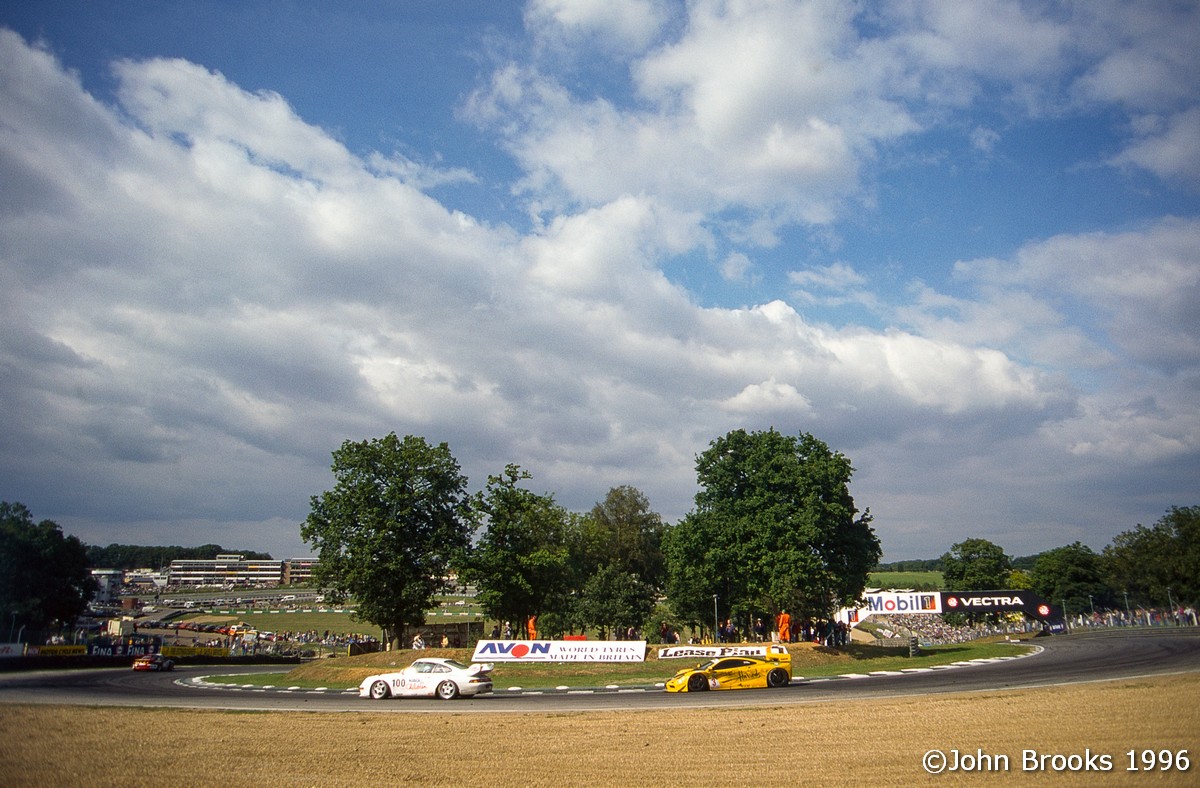
The inaugural trip to Brands was the eighth stop on a 11-round calendar and came just two weeks after a long journey east to Suzuka. The 1000km race in Japan lasted a little over six hours; every other event, including Brands, was run to a four-hour duration, with most cars shared by two (occasionally three) drivers.
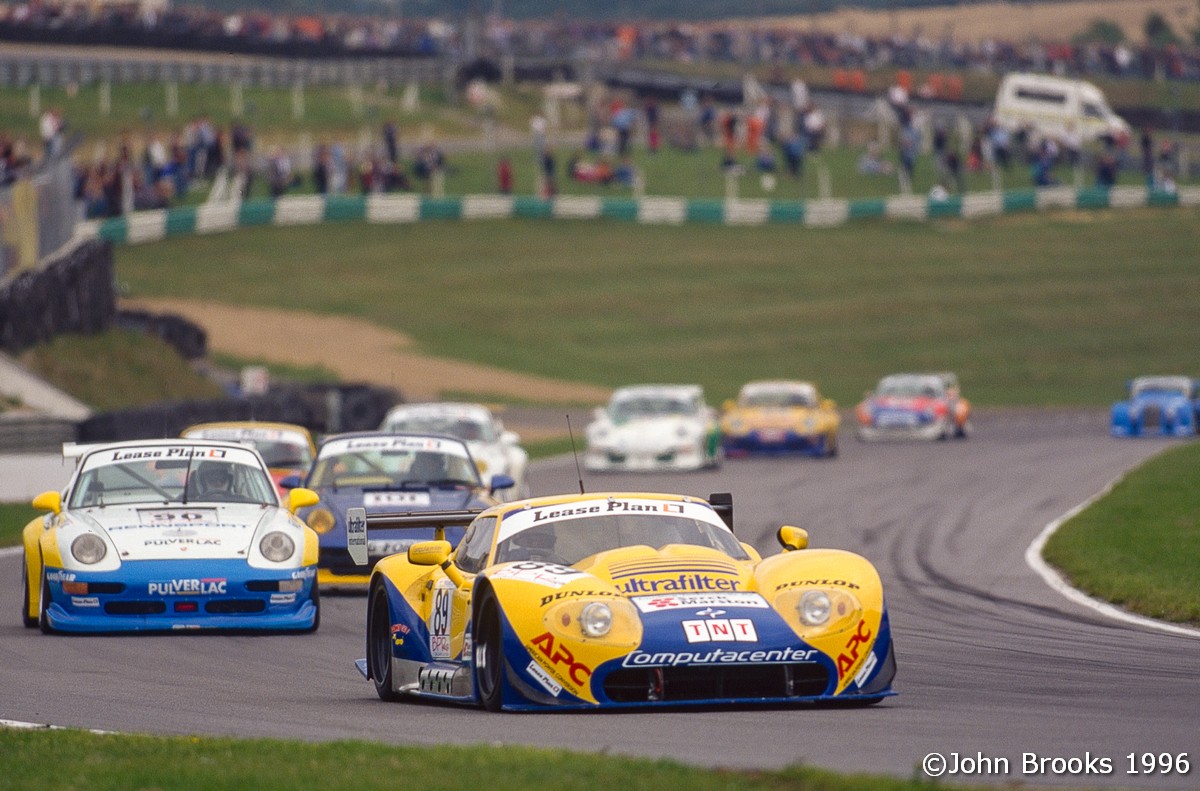
BPR took its 'global' moniker very seriously. Not only were there races in Japan and China, but the entry list for Brands in '96 was thoroughly international, with the likes of John Nielsen, Bob Wollek, and Jean-Pierre Jarier competing against British aces Andy Wallace and James Weaver. The teams were of a similar ilk, with the late David Price pitting his wits against continental combatants like Konrad and Oreca.
But in terms of pure star power, the fans at Brands Hatch that weekend could not help but have their heads turned by what Porsche had brought. The Stuttgart marque rocked up at the Kent track with its new 911 GT1, entered by the factory and driven by two bona fide aces: Hans-Joachim Stuck and Thierry Boutsen.
Its presence was controversial. With its spaceframe chassis optimised for the BPR, many considered the 911 to be a thoroughbred race car – a view backed up by its lack of a road-going model. Balance of Performance was still a decade away, and it seemed inevitable that the car would be untouchable; even the McLaren F1 GTR, which had dominated the season up to this point with six wins from seven races, could not hope to lay a glove on the 911.
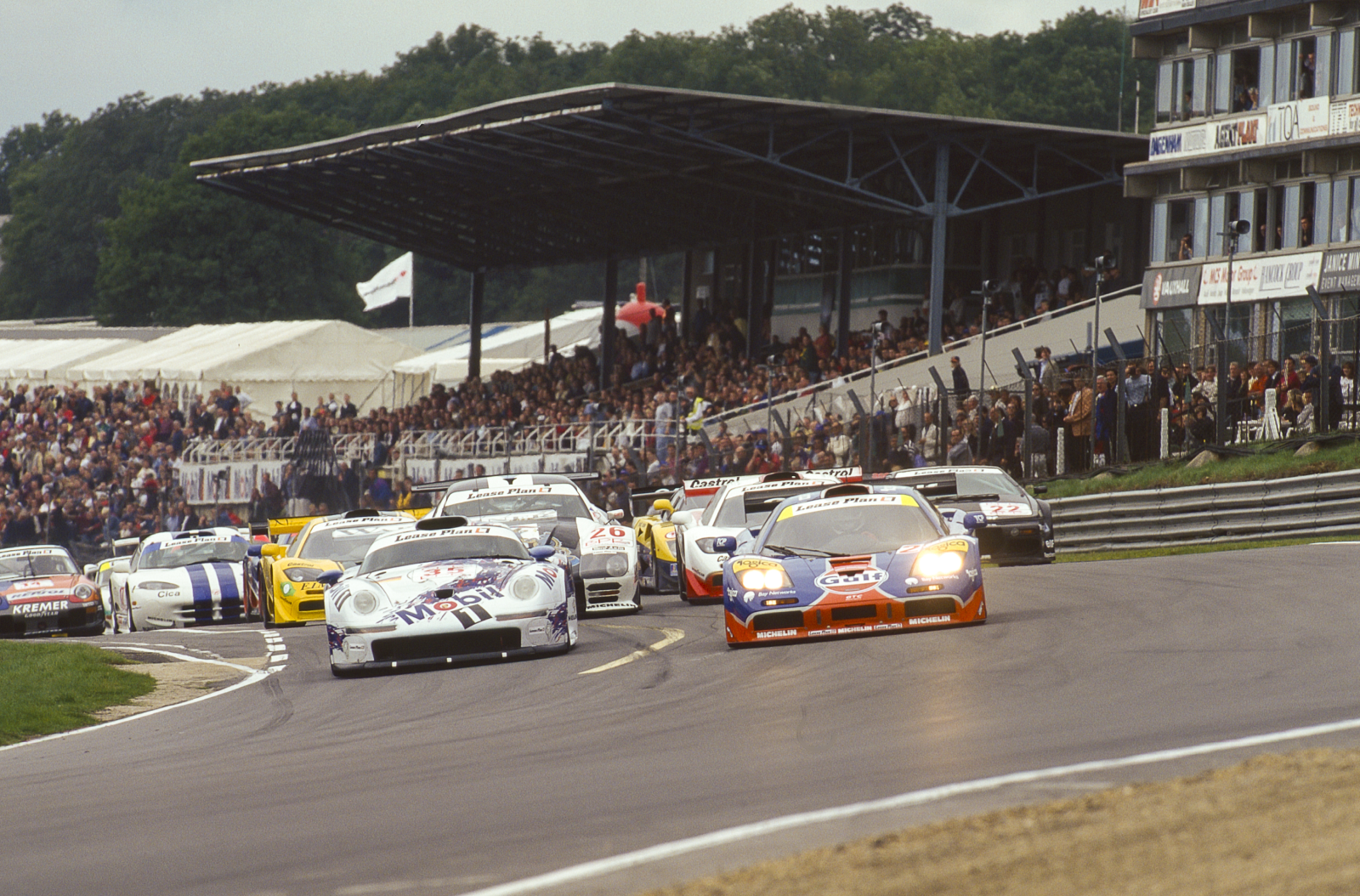
With this in mind, the car was allowed to compete as a guest entry, ensuring that it would not impact the championship. This allowed Porsche to dispense with the sandbags, and Boutsen took full advantage in qualifying. The Belgian ace's time – a 1m21.166s – was almost a second better than championship leader Weaver in the best of the McLarens.
Come the race the dominant 911 didn't make an especially good start and was second on the dash up to Druids. This ensured that the thousands who had packed into Brands that day saw at least a hint of a scrap for the lead.
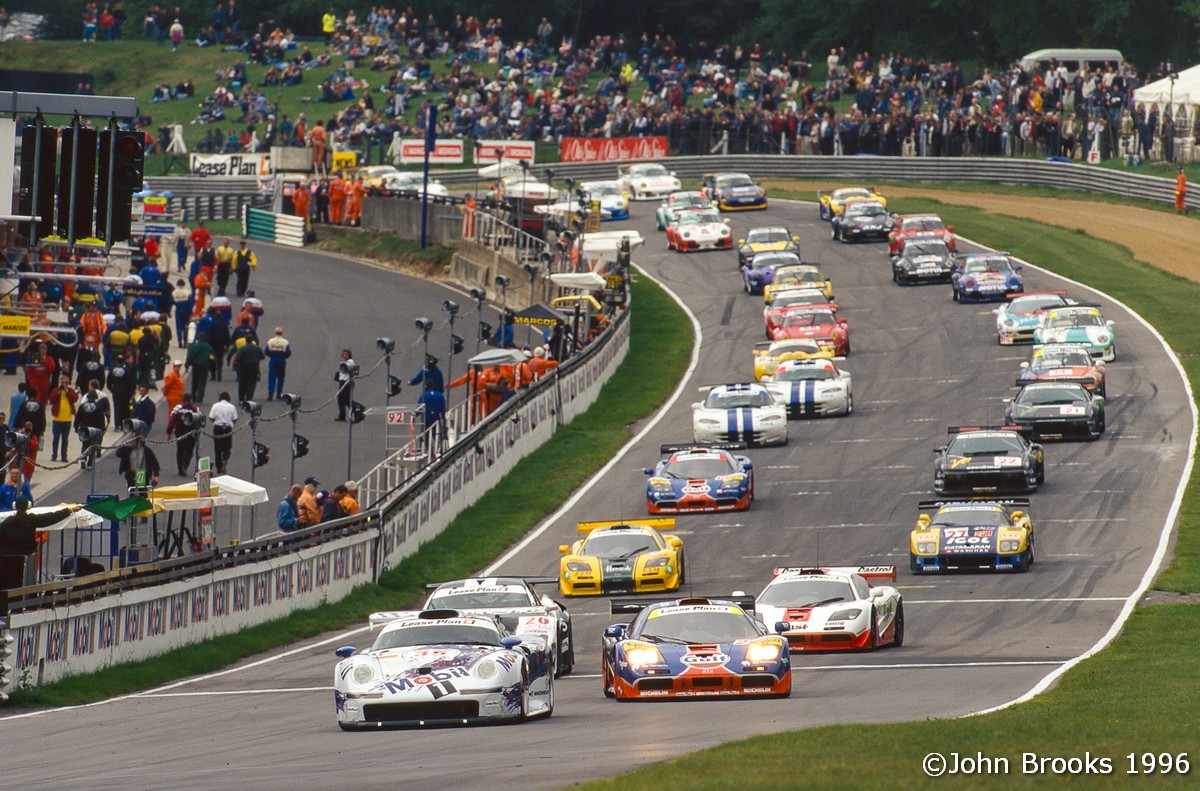
It didn’t last long. On the second tour, the Porsche got alongside the McLaren on the Cooper Straight and completed a straightforward pass into Surtees. It is fair to question whether Stuck or Boutsen broke a sweat over the following few hours. Once again, Germany had triumphed over the English – and this time they didn't need penalties.
One of the domestic drivers flying the flag that weekend was Tiff Needell, who shared the iconic Newcastle United-liveried Lister Storm with Geoff Lees. He dovetailed his racing with a presenting role on the BBC's Top Gear and produced a review of the weekend, which can be found on YouTube. Looking back, he has happy memories of the '96 event and the series as a whole.
“BPR was wonderful,” says Needell with undimmed enthusiasm. “We had Ferrari F40s, all sorts of Bugattis, McLarens, Porsche Turbos, Venturis. There were so many drivers doing it, pros and amateurs, and it was a fun series. It wasn't super professional. I thoroughly enjoyed being in the Lister Storm and Brands was just a glorious track to race on with those cars.”
The Lister broke down – as it did rather often during this period – though not before Needell had enjoyed a scrap with one of the McLarens. Nevertheless, his prevailing memory of that weekend is the dominance of the Porsche.
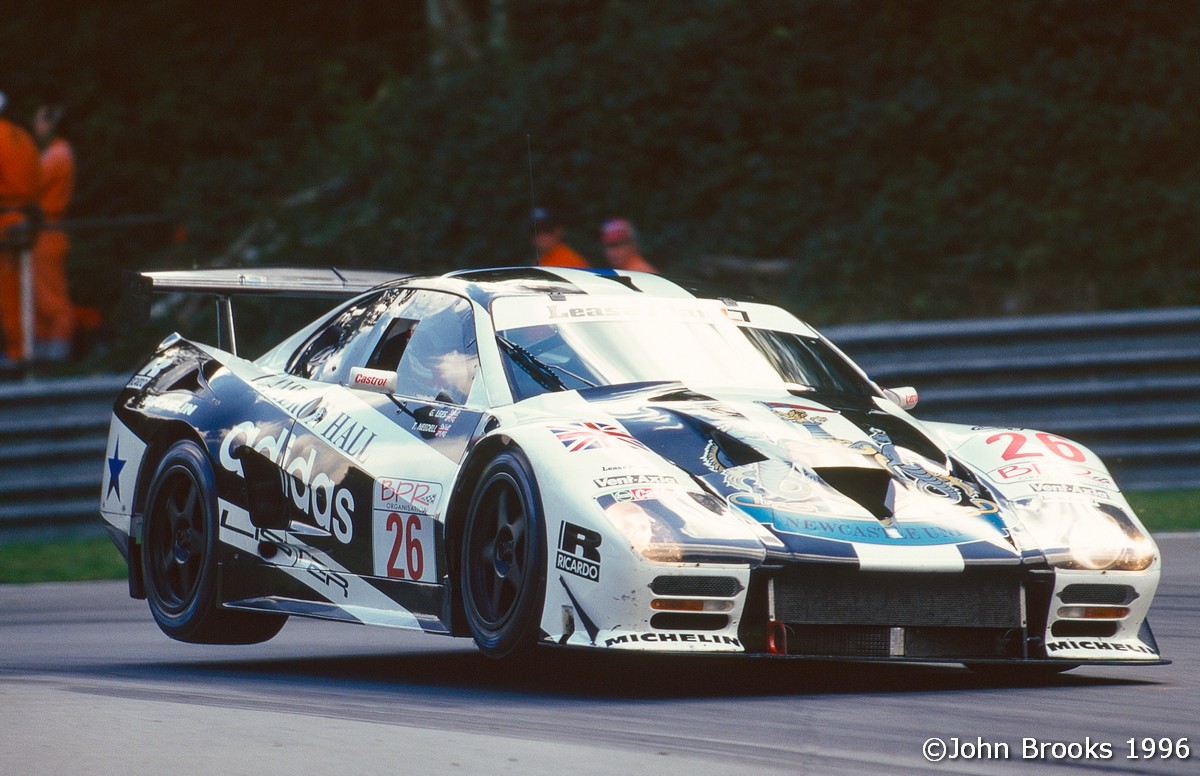
“It was just a ridiculously quick car,” he says, still a little awestruck three decades on. “It turned up and sledgehammered everyone!”
One thing is certain: history will not be repeated this weekend. Modern GT racing is astoundingly close, with thousandths making the difference in qualifying and races rarely won by more than a few seconds. Each of the eight brands competing in 2026 has at least one Pro car, any of which could take victory.
Among the hotly tipped runners is a Porsche 911 GT3 from the Boutsen VDS squad. In a neat piece of historical symmetry, the team has linked up with the Weissach marque this year, three decades on from its founder Thierry Boutsen taking victory with the 911 GT1.
These days, high-level GT racing is firmly established at Brands Hatch. The track is a staple of the GT World Challenge calendar, while British GT will bring a mix of international and domestic stars to the circuit later in the year (26–27 September). GT racing has made a home at the track. Long may it continue.