

In 2013 Aaron Muss died at a hospital in Colorado. He was 18 years old. This weekend he will make his GT World Challenge powered by AWS debut at Circuit Paul Ricard. In between, he represented the United States in snowboarding at the 2018 Winter Olympics in South Korea.
By now, you have probably realised that this is a story worth reading.
"Before the accident, I was an average athlete," says Muss, referring to his very close brush with death. "I wasn't anything special. But the mindset that changed afterwards made me the athlete I believe I am today, and it's why I made the Olympics."
Given the unusual nature of this story, it's worth going back to the beginning. Muss grew up in Colorado and, like many Colorado kids, quickly took to the slopes. Snowboarding became his hobby and eventually the means to achieve his dreams.
"I don't even remember what age it was, but my mom tells me I always had an infatuation with the Olympics," he explains. "I'm very much a patriot and I wanted to represent my country on the biggest stage. And to me, the Olympics is the biggest stage."
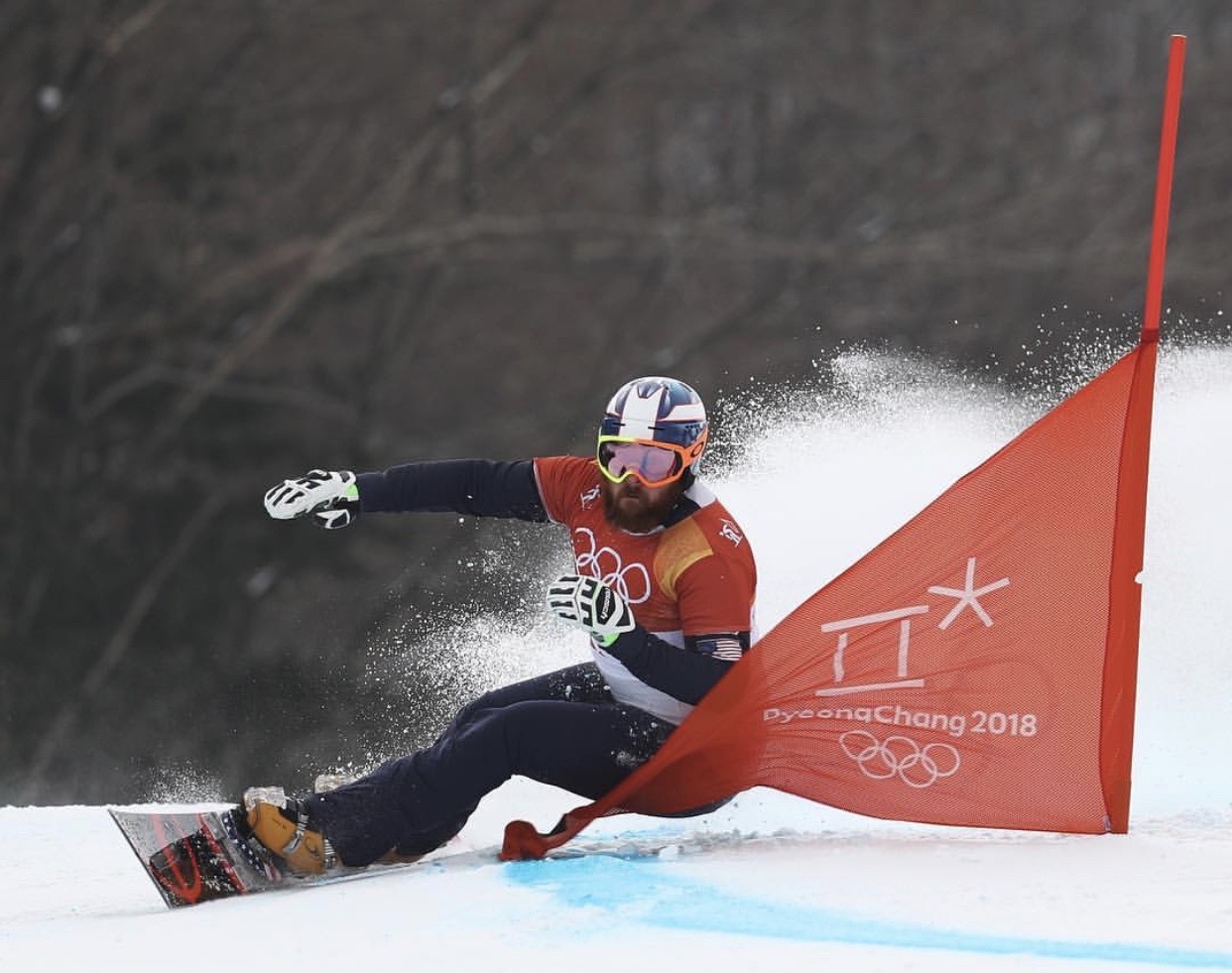
He moved through up the ranks, eventually competing in the North American Cup, but at this point he did not look destined to perform on the big stage.
"I was there for a few years and, honestly, I was good, but I wasn't great," he says. "I was decent. I had a lot of natural ability, but when I was younger, I didn't work at that hard."
He was headed for a solid career, but the Olympics would surely remain a distant dream. Then came his brush with mortality.
What doesn’t kill you…
Injures are a normal part of snowboarding, but with any injury comes the risk of complications. In 2013, Muss dislocated his shoulder at an event returned home for surgery. This did not go according to plan.
"When I had the surgery, I went into something called high-altitude post-operative pulmonary edema,” he explains. “Long story short, I had a hole in my heart.”
This was bad enough, but it got a whole lot worse when the paramedics made a misjudgement, wrongly assuming that Muss had taken a drug overdose.
"It's protocol in the United States, when they see an 18-year-old showing symptoms of an overdose, to make them puke. But I didn't have anything in my system, and it exploded a lung!”
This caused instant pneumonia and there was no local hospital with the necessary facilities to treat such a serious case.
"They tried to put me in a helicopter and fly me to a level 1 trauma centre, but the Colorado weather doesn't always like to cooperate. They had to throw me in an ambulance, which took about an hour.
"That's where I flatlined and I died,” he says matter-of-factly.

This was relatively brief, but the consequences could have been catastrophic. Muss was placed in a medically induced coma, and his mother was warned that her son may have severe brain damage. When he woke a month later, Muss was unable to read, write, or speak.
Mercifully, however, the damage was not permanent and his recovery was quick: "I was back on a snowboard, prepping for the Olympic trials within three months," he says. What’s more, it changed his approach entirely.
"Before, I took my natural ability for granted. I thought, 'I'm good, I'll just skate through life being good.' But Olympians aren't good, they're great. And to be great, you need to have the work ethic. That’s what changed in me.
“That next season, I won 16 out of the 18 events."
The success grew, ultimately securing Muss a place on the U.S. team for the 2018 Winter Olympics in Pyeongchang, South Korea.
“It was absolutely amazing to achieve my goals, but I didn't do it the right way,” Muss says. “I was so focused on a medal, so focused on performing, that I didn't enjoy the experience as much as I should have. I'm not saying I didn't enjoy it, but I was so goal-driven that I didn't enjoy the ride.
"That's the biggest thing I took from the Olympic experience: achieving your goal is amazing, but the journey to get there is the most important thing. That's what you're going to remember forever."
Swapping slopes for circuits
Muss continued snowboarding after the Olympics but his commitment to the sport was fading. Fortunately, he discovered a new passion in motor racing and was able to bring his main sponsor across with him.
"I started in touring cars and then did two years in the Lamborghini Super Trofeo. I won the Pro-Am championship in 2024 and then went to GT3."
Last year he was given the chance to run a handful of IMSA rounds; he expected to remain in North America this year, only to receive an unexpected invitation.
"Kyle Marcelli called me out of the blue and said, 'Hey, what are you doing next year?' We talked and he explained about Comtoyou Racing. Then I had a phone call with François [Verbist, Comtoyou Racing team manager].
“They're awesome people. Money often outweighs loyalty and value, but I didn't feel that from them. Also, their results for the little time they've been with Aston Martin speak for themselves.
This year, Muss will drive the #11 Vantage in the Endurance Cup. There's an American flavour to the programme, combining U.S. representative Muss, Canadian ace Marcelli, and Brazilian racer Marcelo Tomasoni. Muss has tested at a number of circuits, including Portimão and the Nürburgring, plus a single lap of Spa-Francorchamps in a Fun Cup car. The learning curve promises to be steep.

But while it's a largely unknown crew – only Tomasoni has prior GT World Challenge experience – Muss has a lot of faith in this programme.
"Marcello is very fast. His work ethic is unmatched to any Bronze driver I've ever seen so far. The first thing he said in our team meeting was, 'Don't treat me like a customer, treat me no differently than any of the pros.' He pours over data and works extremely hard.
"I know Kyle from racing in Lamborghini Super Trofeo and he’s a super nice guy, humble, and extremely quick. When we're in a good position, he’s the guy we need to fight for a win. You can trust him to bring the car home. I'm just excited to see what this American group can do.”
Snowboarding and racing have some obvious crossover points: both require inch-perfect accuracy, bravery and full commitment. So, to conclude, we ask Muss about the most important thing he's brought from his past sporting life to his new one.
"Mindset," he replies instantly. "I think where I lack against the pro drivers in the car is experience and technique. But mentally, I would say I'm one of the stronger guys on the grid. I did 25 years as a world-level athlete. My mental game is very strong. And that's really what I've taken from snowboarding."
This year, Muss enters the most competitive GT series in the world, with limited experience of the tracks and a new car to learn. But he’s by no means stressed. After all, he’s faced bigger challenges.
“Life is a gift,” he says. “In theory, I already lost it once.”